
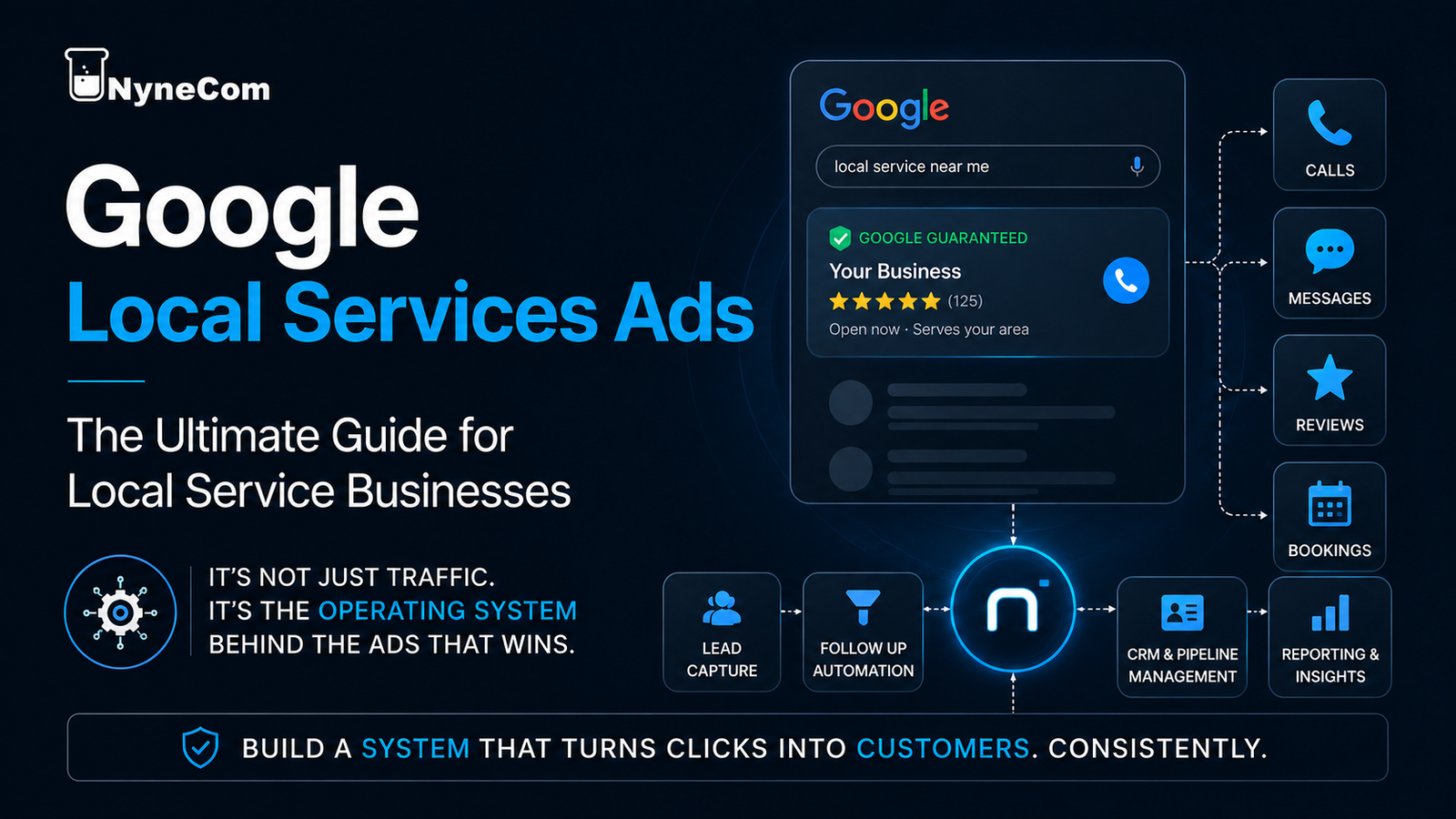
Google Local Services Ads: The Ultimate Guide for Local Service Businesses
The ad creates the opportunity. Your operating system determines whether that opportunity becomes a conversation, an appointment, and profitable revenue.
Most businesses do not need more leads nearly as much as they need a better system for handling the leads they already paid to receive. Google Local Services Ads can put an eligible business in front of high-intent local buyers, but the platform cannot answer missed calls, qualify prospects, schedule appointments, follow up, collect reviews, or measure whether a lead became profitable revenue.
The problem at a glance
Local Services Ads often expose operational leakage that already exists inside the business. When response time, scheduling, follow-up, reviews, and reporting depend on memory, additional ad spend can create more activity without creating predictable growth.
Paid Leads Go Unanswered
A missed call or delayed message can send a ready-to-buy customer directly to the next provider.
Profiles Attract the Wrong Demand
Inaccurate services, locations, categories, or availability can produce poor-fit leads and wasted budget.
No One Tracks the Revenue
Lead count looks active, but the business cannot clearly connect ad spend to appointments, customers, revenue, and profit.
Why this problem costs more than most businesses realize
A business pays for a Local Services lead. The customer calls while the owner is serving another customer. No one answers, no missed-call text-back fires, and no task is created in the CRM. The caller contacts another provider within minutes.
The visible loss is one paid lead. The hidden loss may include the customer’s first purchase, future purchases, referrals, reviews, and lifetime value. Repeated across dozens of leads, small response failures become a serious revenue leak.
How the system works
A strong Local Services Ads operation connects profile quality, response speed, lead handling, reputation, and reporting into one coordinated system. The goal is not maximum lead volume. The goal is profitable, fulfillable demand that the business can handle without breaking the team or the customer experience.
Attract the Right Demand
Configure accurate services, categories, locations, verification details, photos, and business information.
Respond Immediately
Use fast human response supported by missed-call text-back, notifications, booking, and lead routing.
Follow Up Until Resolved
Create structured follow-up so an unanswered call or first message does not become a forgotten opportunity.
Track Business Outcomes
Measure qualified leads, appointments, customers, revenue, profit, and lost opportunities—not just raw lead count.
What the finished system should include
- An accurate Local Services Ads profile with current services, business information, service areas, verification, and relevant photos.
- Immediate lead capture inside a CRM with the source, requested service, contact details, and next action clearly recorded.
- Missed-call text-back, team alerts, appointment booking, and escalation when a lead has not received a timely response.
- A repeatable review-request process that asks satisfied customers at the right moment and monitors negative feedback.
- Reporting that connects each lead to response time, qualification, appointment status, revenue, gross profit, and final disposition.
These are operating targets, not guaranteed advertising outcomes. Actual lead costs, rankings, volume, and results vary by category, market, competition, account quality, bidding, budget, and business execution.
⚠️ What Usually Goes Wrong
The business turns on ads before fixing intake. Leads land in disconnected inboxes, missed calls disappear, no one owns follow-up, reviews are requested inconsistently, and leadership judges performance by lead count alone.
✅ What Makes It Work
The profile attracts services the business can fulfill, every inquiry enters one operating system, response is immediate, follow-up is assigned and automated, reviews are systematic, and leadership tracks revenue outcomes.
Example: what this looks like in a real business
Illustrative scenario: A local service business receives an LSA call after hours. The call is missed, but the system immediately texts the prospect, creates a CRM record, asks what service is needed, offers available booking times, and alerts the assigned team member.
The next morning, the team sees the full conversation, confirms the appointment, completes the service, and triggers a review request. Leadership can later see the original lead source, response time, appointment, sale, revenue, and review outcome in one record.
Why this matters for local service businesses
Local buyers often have immediate intent and multiple providers to choose from. That makes speed, trust, availability, and operational clarity especially important. The same framework can apply across eligible home services, professional services, wellness, automotive, legal, real-estate-related, and other local categories where Google offers Local Services Ads.
Measure the value of recovered opportunities, not only the software cost.
Choose the path that fits your business
Use this article as a do-it-yourself operating guide, or choose the level of implementation and leadership support that fits your business.
AI Ecosystem
CRM, automation, AI follow-up, missed-call response, lead management, booking, and related growth systems designed to help your team operate more consistently.
Explore AI Ecosystem →Elite C Suite
$5,000/month + 10% of verified trackable income generated. Fractional CFO, COO, CMO, and AI Officer leadership coordinated under one growth strategy.
See Elite C Suite →
Built by Reginald “Reggie” Pinkston
Reggie leads NyneCom and Elite C Suite across CRM, automation, AI, marketing, operations, and revenue systems for established businesses.
Editorial notes and disclosures
This framework was adapted into NyneCom’s broader operating-system point of view for local service businesses. Also read the LinkedIn edition of this article, explore the Scale to $1M Monthly Blueprint, and review the Elite C Suite model.
Frequently Asked Questions
Are Google Local Services Ads only for contractors?
No. Availability depends on the market and category, but Google offers Local Services Ads to multiple local service industries. Businesses should confirm eligibility directly with Google for their specific category and location.
Do Local Services Ads charge per click?
Local Services Ads are generally structured around valid leads rather than ordinary website clicks. The exact lead types, charges, and credit policies can vary by market, category, and current Google policy.
What should a business fix before increasing its LSA budget?
Fix profile accuracy, response time, missed-call handling, booking, follow-up ownership, review generation, lead tracking, and the team’s ability to fulfill additional demand.
Can automation replace the sales conversation?
No. Automation should protect response time, organize information, offer convenient next steps, and keep follow-up from being forgotten. Human judgment and conversation still matter for qualification, trust, and closing.
How should LSA performance be measured?
Track more than lead count. Measure answered and missed calls, response time, qualified leads, appointments, estimates or consultations, customers won, revenue, gross profit, lead quality, and the cost of each meaningful business outcome.
Some links below are affiliate links. If you sign up through them, NyneCom may earn a commission at no extra cost to you.


Fix the operating system before you increase the advertising budget.
Build the response, follow-up, booking, reputation, and reporting infrastructure that helps your business turn paid demand into measurable revenue.