
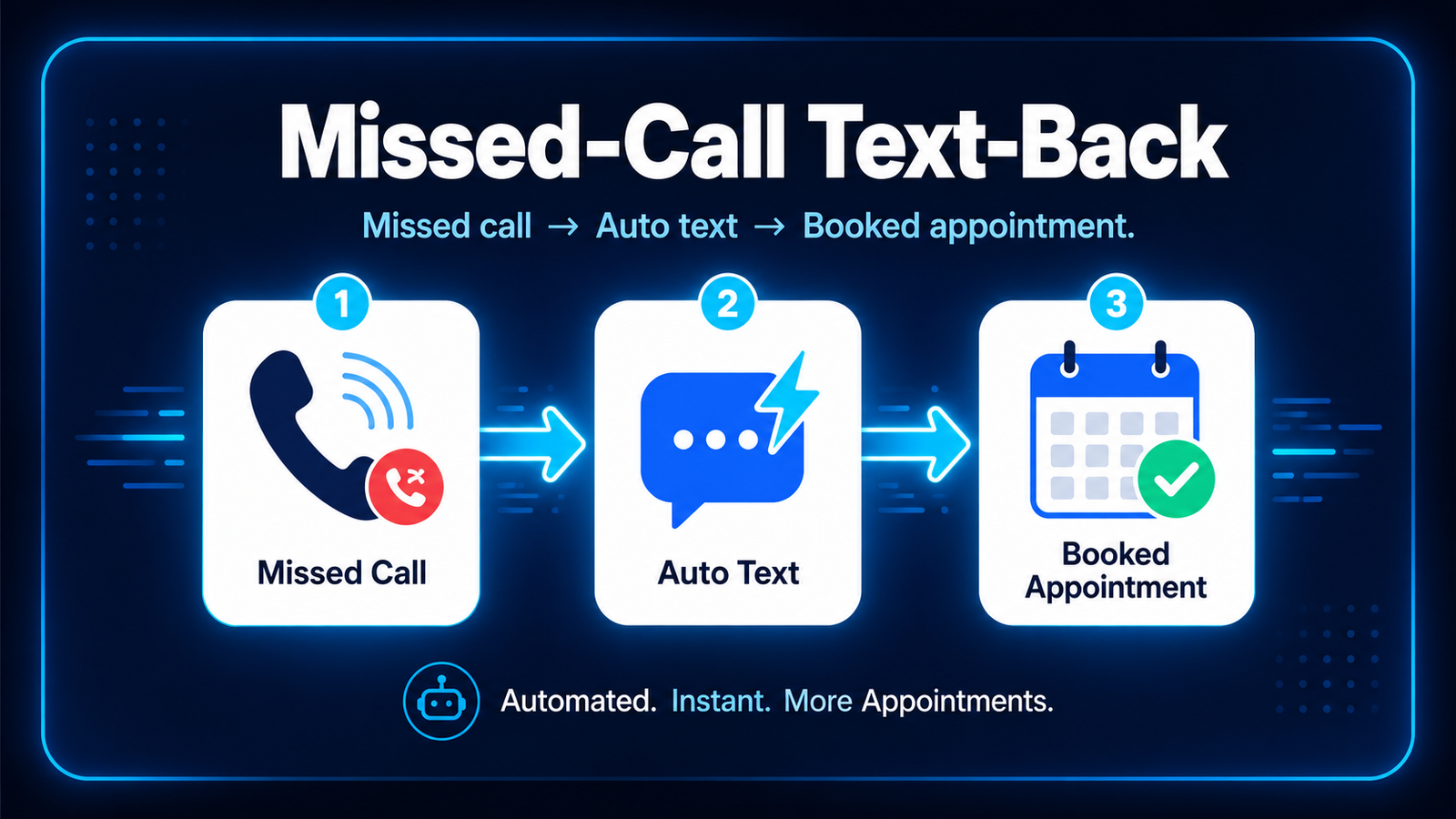
Most small businesses only answer around four out of every ten calls that come in — and most of the callers who don’t get through never call back. That’s exactly the gap missed-call text-back closes for Virginia Beach businesses: the instant a call goes unanswered, an automatic text goes out so the caller hears back within seconds instead of never hearing back at all. The calls you already pay to generate stop quietly disappearing into voicemail nobody checks.
Why an unanswered call is more expensive than it looks
Industry research aggregating call data across service businesses puts the average unanswered-call rate at roughly 62% — and of the callers who reach voicemail instead of a person, the large majority never leave a message and never call back. Many call the next business on the list within minutes.
62% Go Unanswered
Most calls to small service businesses never reach a live person.
85% Never Call Back
Callers who hit voicemail usually just move on to the next option.
They Call a Competitor Next
The search results page they found you on has several other numbers.
What should be in a missed-call text-back system for Virginia Beach businesses?
A good system responds instantly and still feels like it came from a person, not a robot reading a script.
Instant Auto-Text
A reply goes out within seconds of the missed call, every time.
Personal, Not Robotic
Short, warm wording that invites a reply instead of sounding corporate.
Real Booking Path
A clear next step — a link, a time, or a real person — not a dead end.
Which missed calls should trigger a text-back first?
Every missed call deserves a response, but a few situations create the most missed calls — and the most lost revenue.
After-Hours Calls
Evenings and weekends, when nobody’s at the desk to answer.
On-the-Job Calls
Techs and crews who physically can’t pick up mid-job.
Peak-Time Overflow
Every line busy at once during the day’s rush.
First-Time Callers
No existing relationship, so no reason to try again later.
What good missed-call text-back should measure
A working system gets judged on whether missed calls turn into real conversations, not just whether a text went out.
Response Rate
How many missed callers reply to the automatic text.
Conversation Rate
How many replies turn into a real back-and-forth.
Booked-Job Rate
How many of those conversations become a scheduled job.
How the missed-call flow works
Call Comes In
A prospect or customer dials the business number.
Goes Unanswered
Nobody picks up — the line is busy, after hours, or on a job site.
Auto-Text Fires
A friendly text goes out within seconds, no manual trigger needed.
Routed to Booking
An interested reply moves straight into scheduling or a live handoff.
The real cost of the calls nobody hears ring
Industry estimates built from call-tracking data put the typical service business’s annual loss from missed calls in the six-figure range once volume, miss rate, and average job value are factored in. None of that shows up as one bad day. It shows up as ad spend that never quite pays for itself, a schedule that always feels thinner than it should, and a phone that rang plenty — just not into anyone’s hands.
That’s why missed-call text-back isn’t a nice-to-have widget. It’s a safety net under every call a business already paid to generate.
Those numbers are industry averages — useful for the big picture, but every business's phone rings a little differently. The calculator below uses your own numbers instead of a national average, so you can see roughly what missed calls are costing your specific business each month.
Missed-Call Revenue Calculator
See what missed calls could be costing your Virginia Beach business every month.
*Based on a 40% average text-back response rate — the low end of the 35–50% industry range cited above.
⚠️ What Usually Goes Wrong
The call goes to voicemail, and nobody ever hears the message was left — if one was left at all.
✅ What Makes It Work
A text lands in seconds, so the caller feels heard even when the phone couldn’t be picked up.
Why this matters in Virginia Beach and Hampton Roads
Virginia Beach service businesses often run lean — a small team, techs in the field, phones that ring while hands are full. That’s exactly the setup where calls get missed most. Across Hampton Roads, buyers are used to getting a fast reply from someone; if your business doesn’t answer, the next name on the list usually does.
How this works across Hampton Roads, not just Virginia Beach
The same gap shows up in Chesapeake, Norfolk, Portsmouth, Suffolk, Hampton, and Newport News — small teams covering a lot of ground, with calls coming in faster than anyone can physically answer them. A text-back system closes that gap the same way in every one of those markets: instantly, and without adding headcount.
The call that rang once on a Tuesday
It’s never dramatic. A homeowner calls a Virginia Beach business at 1:40 on a Tuesday afternoon. The crew is mid-install, phone buried in a truck console. It rings four times and goes to voicemail. The caller doesn’t leave a message — most people don’t. They just tap the next number on the search results page.
Nobody did anything wrong. The team was working, which is exactly why they couldn’t answer. But from the caller’s side, there’s no difference between “busy working” and “not interested.” The call just goes unanswered, and the job goes to whoever picked up.
Here’s the same moment played out two different ways — one where that missed call just disappears, and one where it doesn’t:
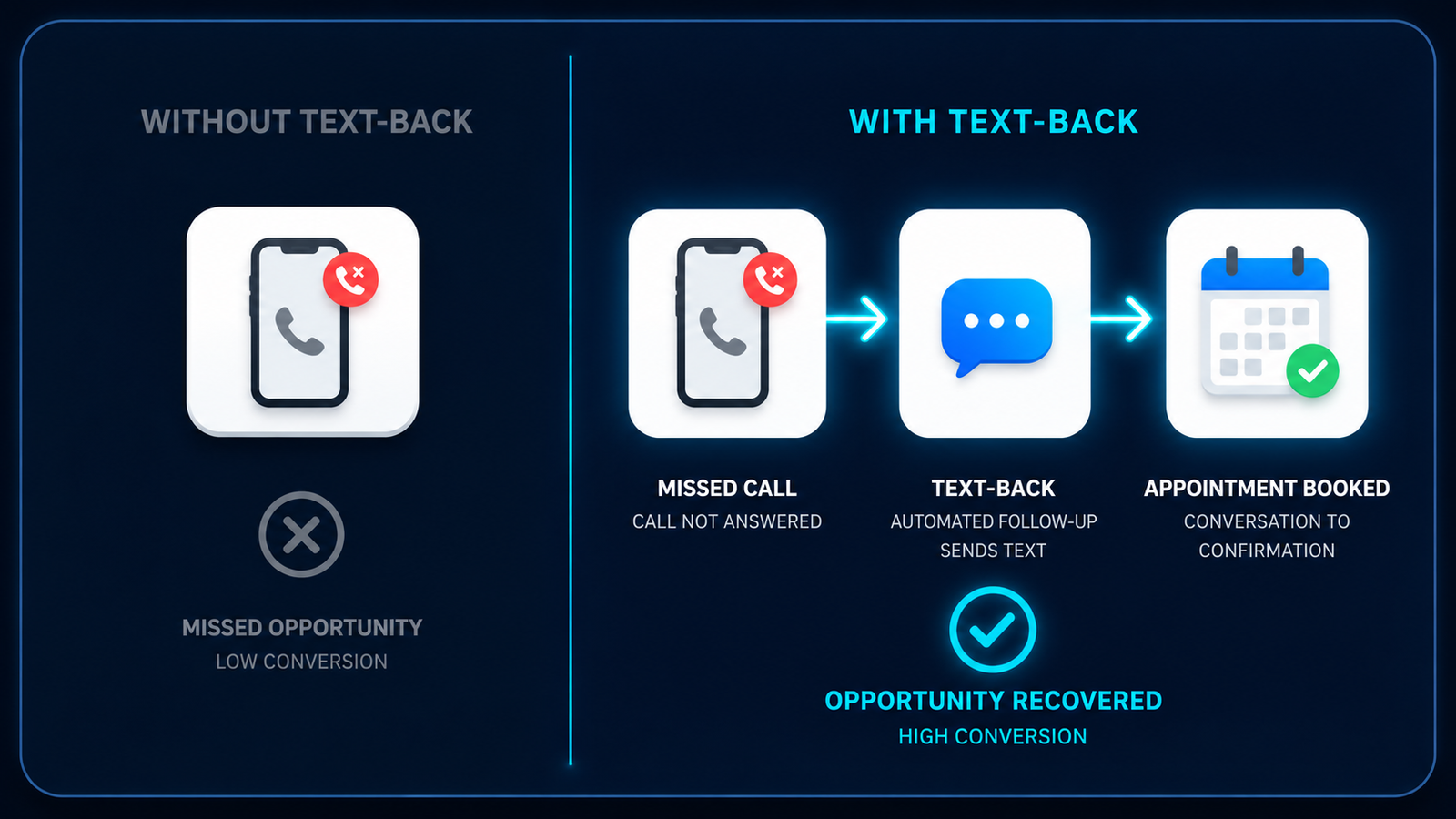
The Hidden Problem
Being busy doing the work is exactly what causes the next job to slip away.
The Better Move
Let an automatic text hold the caller’s attention until someone can call back.
What a complete missed-call text-back system should do before the first ring
Before it goes live, the message, the routing, and the follow-up path should already be set.
- Connect every business line so no missed call slips through uncovered
- Write a short, friendly text — not a corporate auto-reply
- Give the caller a real next step: a booking link or a live reply
- Route replies into the CRM instead of a personal phone
- Track response rate and booked jobs, not just texts sent
Is It Worth Fixing?
Which NyneCom path fits your business?
Once the math checks out, there are two ways to put a missed-call system to work — pick based on how hands-on you want NyneCom to be.
AI Eco System
Instant missed-call text-back, routing, and reminders layered into your CRM — built for teams that want coverage without a full leadership hand-off.
Explore AI Eco System →Elite C Suite
$5,000/month + 10% of trackable profit generated. Full fractional AI leadership across CRM, automations, and revenue systems — NyneCom runs it end to end.
See Elite C Suite →
Built by Reginald “Reggie” Pinckston
Reggie leads NyneCom’s work across CRM, automation, and revenue-focused AI systems, helping Virginia Beach businesses turn missed calls into booked appointments and repeat revenue.
How to make missed-call text-back safer and easier to measure
Missed-call text-back and speed-to-lead automation solve the same problem from two angles — one catches the call the moment it’s missed, the other makes sure every lead gets a fast first response across every channel. If you haven’t covered that broader picture yet, it’s worth reading how speed-to-lead automation turns response time into booked calls. For more on the scale of the missed-call problem and how businesses are solving it, this missed business calls research breakdown is a useful reference.
Frequently Asked Questions
What is missed-call text-back?
Missed-call text-back for Virginia Beach businesses is an automation that sends a text to anyone whose call goes unanswered, so they hear back within seconds instead of hitting voicemail.
Does it replace answering the phone?
No — it’s the safety net for the calls that can’t be answered in the moment, not a reason to stop trying to answer live.
Will it feel robotic to callers?
Not if the message is short, personal, and gives a real next step — that’s the difference between a helpful text and a corporate auto-reply.
Where does AI fit in?
AI sends the instant text, handles the back-and-forth reply, and routes interested callers straight into booking.
Some links below are affiliate links. If you sign up through them, NyneCom may earn a commission at no extra cost to you.



Ready to stop losing calls to voicemail?
See what a text-back system could recover from the calls you’re already paying to generate.